
Free cleaning guide – How to clean in an eco-friendly way and what to watch out for.
Sara IdenforsIn summary, we list hazardous chemicals to watch out for in cleaning products and offer environmentally friendly alternatives.
Last edited on May 8, 2024

We list the most hazardous chemicals to watch out for and recommend environmentally friendly alternatives.
Cleaning in an environmentally friendly way is not only good for nature, fish in waterways, and all other plant and animal life, but also for you and your family. Being around harmful chemicals is not healthy, and they can harm us quite directly.
It is worth mentioning that most things are chemical. Water, for example: H2O, dihydrogen oxide; salt is chemical: sodium chloride – neither of these two is harmful. Sodium chloride may not sound very appealing, but when you know that it means = salt, it suddenly seems less dramatic. What is needed, then, is knowledge.
By learning a little more, you can easily distinguish harmful substances from harmless ones. We will never be able to completely avoid contact with harmful chemicals; for example, we cannot decide which cleaning products are used in all the different places we spend time in during a day, BUT we can do our best by making sure we are not exposed to unnecessary and unhealthy substances at home.
Here we will go through a few simple things you can focus on to make your everyday life less exposed to harmful chemicals.
Tip number 1 – Start reading ingredient lists
Warning symbols on the back are the first warning sign. If the warning and ingredient lists are also long, you should be cautious – keep reading and investigate, or put the product back on the store shelf.
Things that are toxic or can cause serious, long-term harm are labeled like this
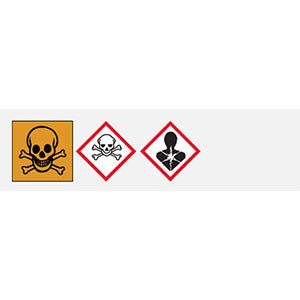
Products that are hazardous to the environment are labeled like this

Soapa requires none of the above labels; Soapa is readily biodegradable and harms neither you nor the environment.
Chemicals to watch out for in cleaning products
Bleach sodium hypochlorite – a toxic chemical that harms aquatic organisms. As we know, wastewater eventually ends up in lakes and waterways.
Triclosan – can cause hormonal problems, both for you as the user and when it enters the ecosystem.
2-Butoxyethanol – can cause breathing difficulties and low blood pressure, and may even reduce the red blood cell count.
Denatured ethanol – ethyl alcohol that causes nausea and dizziness, can cause loss of vision, and in the worst case, death. This should preferably not be kept in the home, and if you have it at home, it must be handled with extreme caution and kept far from children.
Alkyl dimethyl benzyl = ammonium chloride, works in the same life-threatening way as denatured ethanol.
Things you can use for cleaning instead:
Baking soda can be used for cleaning
Baking soda is alkaline and can therefore be used for all cleaning where the dirt comes from plants, animals, or people.
Some tips:
Remove bad odors from shoes.
Clean a mattress topper / sofa / rug
Mix with vinegar to clear clogged drains
Spirit vinegar can be used for cleaning
Spirit vinegar is acidic and can therefore be used for all cleaning where the dirt comes from metals, corrosion, or where limescale needs to be dissolved.
Some tips:
Clean the coffee maker that has become clogged with limescale
Clean the strainer in the faucet / showerhead
Use as a rinse aid and polishing agent.
Do NOT use on anything containing eggs or on wooden floors.
Vinegar can be used for cleaning
Vinegar is acidic and can therefore be used for all cleaning where the dirt comes from metals, corrosion, or where limescale needs to be dissolved.
Some tips:
Remove tape residue
Catch fruit flies
Soft soap for all cleaning at home and at work
Soft soap is both alkaline and greasy, making it suitable for all cleaning where the dirt comes from plants, animals, or people, or where the dirt is greasy.
Some tips:
Pre-treat greasy stains on clothes before washing
Clean the kitchen hood filter
Behind the stove
In the bathroom
________________________________________________________________
Questions and Answers
- What is the first step in avoiding harmful chemicals?
The first step is to start reading the ingredient lists on cleaning products and pay attention to warning signs, especially if the ingredient list is long.
- What are some examples of hazardous chemicals that may be found in cleaning products?
Examples of hazardous chemicals include chlorine, triclosan, 2-butoxyethanol, denatured ethanol, and alkyl dimethyl benzyl.
- What are some eco-friendly alternatives suggested for cleaning instead of hazardous chemicals?
Eco-friendly alternatives include baking soda, vinegar, wine vinegar, and soap, which can be used for different types of cleaning depending on the source of the dirt.
- What are some examples of uses for vinegar in cleaning?
Examples of uses for vinegar include cleaning the coffee maker, removing limescale from taps and showerheads, and using it as a rinse aid and polishing agent.
- What is the advantage of using soap for cleaning?
The advantage of using soap for cleaning is that it is both alkaline and fatty, making it effective for cleaning dirt originating from plants, animals, or people, as well as greasy dirt.
Visit our store Soapa.se