Laundry detergent
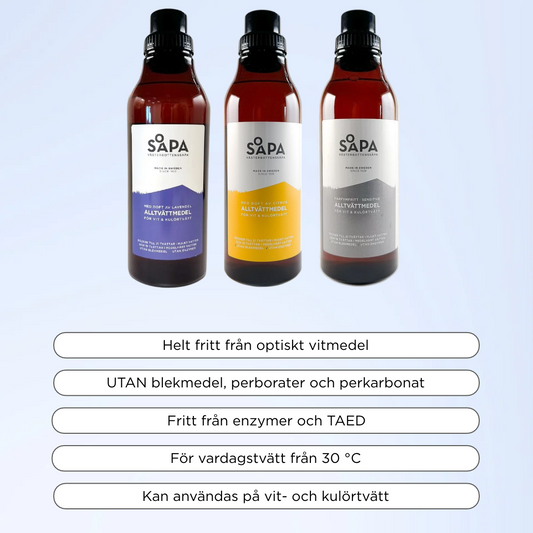
Fewer chemicals. More sustainability. The same clean results. Our all-purpose detergent, made with soap, cleans effectively without unnecessary chemicals. One product for both whites and colours—gentle on skin and the environment, yet just as powerful against dirt. Suitable for all materials, including wool.
-
Scent of Lavender4.72 / 5.0
960 reviews 960 reviews
All-Purpose Laundry Detergent – Detergent for whites and colors, 750 ml
Buy more & save moreRegular price €8,95Regular priceUnit price / perSale price €8,95 -
4.53 / 5.0
119 reviews 119 reviews
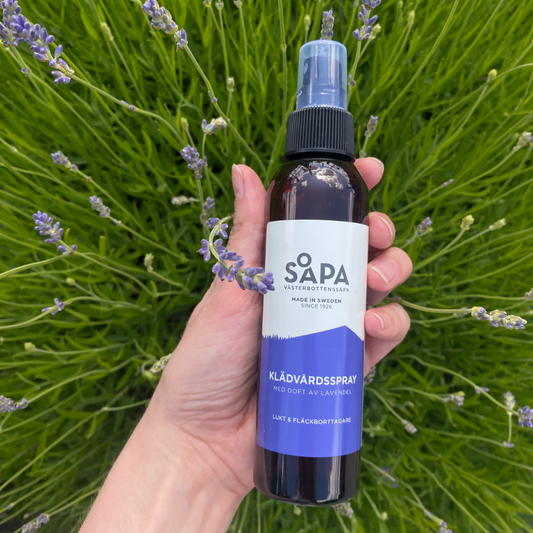
Garment Care Spray – Odor and Stain Remover, 150 ml – Lavender Scent
Regular price €8,95Regular priceUnit price / perSale price €8,95 -
Regular price €8,95Regular priceUnit price / per
Sale price €8,95
-
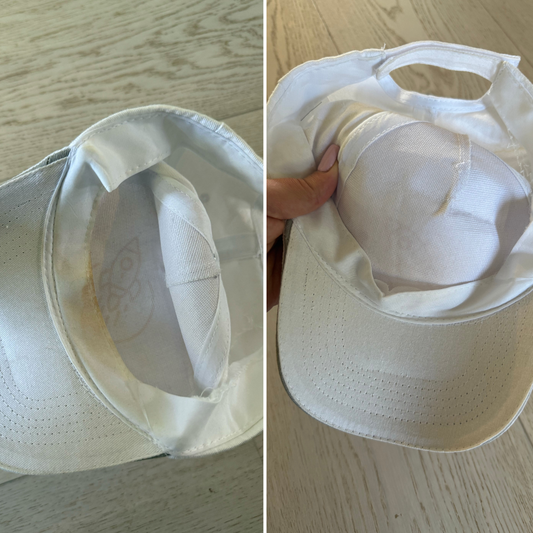
★★★★★"I saw an advertisement for SOAPA and honestly didn’t think it would be that good, but I bought it to try it out. I had stubborn stains that wouldn’t come out with various products. I tried SOAPA Stain Remover and Multi-Surface Cleaner, and the stains are gone. I’ll be using SOAPA from now on!"- Johanna from Kungsbacka
-
★★★★★"Your laundry detergent is excellent and smells great—you don’t need any fabric softener. I probably won’t ever wash with any other detergent."- Jessica from Linköping
-
★★★★★"Not only is the scent sweet and fresh, but the laundry detergent is also really good! Which is actually the best thing about the detergent, although a pleasant scent is always a bonus."- Therese from Herrljunga
Frequently Asked Questions & Answers
How much laundry detergent is actually needed for the clothes to get clean?
It depends on how hard the water is. Hard water requires more detergent. However, most households in Sweden have soft water. It also depends on how heavily soiled the laundry is, how much laundry there is, and the size of the machine. For lightly soiled laundry, a standard-size machine, and soft water, use 35 ml. Increase the amount from there as needed, but do not overdose.
How much laundry detergent is needed for hand washing?
10–15 ml for a 10-liter basin of water; likewise here, you may use a little more detergent if the laundry is heavily soiled.
What applies to a full and a half-full load?
The dosage on the bottle is for a full load; reduce it if you have less laundry.
Is it environmentally friendly?
Yes.
Why do you say that SLES is unnecessary in laundry detergent?
We do not use SLES in our laundry detergent; here are the reasons:
* It does not emulsify grease effectively.
* It creates foaming problems, which means that a defoamer must be added—in other words, another chemical to the ingredient list. Explanation: A surfactant that creates foam forms an emulsion with air and water and therefore does not work on cleaning, which involves an emulsion of oil and water. The purpose of a laundry detergent is to clean, not to create bubbles that are pleasant to look at. If you want to look at pretty bubbles, it is better to buy soap bubbles ;)
* SLES is sensitive to the calcium and magnesium found in water (the more Ca and Mg, the higher the water hardness), which is why “water softeners” such as phosphonates are added—yet another chemical to the list. (Nonionic surfactants, which we use, are not sensitive to hard water.)
How can I reduce my use of laundry detergent to be more environmentally friendly?
Wash only when necessary; air out instead if possible. Pre-treat stains, and don’t lower washing temperatures too much.
Is it fragrance-free?
There is one scented and one unscented version.
Is it hypoallergenic?
Allergy sufferers should always choose the fragrance-free option. Regardless of the product, anyone with allergies should opt for fragrance-free products, including skin creams, shampoos, and products containing essential oils. Always choose products without added fragrance if you have allergies.
Can it be used for baby clothes?
Yes, fragrance-free is preferable. Small children don’t need fragrances on their clothes.
Can it be used for whites, blacks, and colored laundry?
Yes, that works. However, our laundry detergent contains neither bleach nor optical brighteners. If you feel that a garment needs bleaching, we recommend 1–2 tbsp of baking soda.
Does it work on different materials (wool, silk, sportswear)?
Our laundry detergent contains no enzymes, so even wool can be washed with our detergent. However, delicate garments and sensitive materials should always be washed according to the care instructions on the garment and with great care.
Does it remove musty odors from polyester clothing (sportswear)?
Yes, wash according to the care instructions and feel free to use our citrus-scented laundry detergent.
What are the most common ingredients in laundry detergent, and how do they affect my clothes and skin?
Laundry detergent contains surfactants, and all surfactants affect the surface tension of water. Therefore, you should follow the recommendations and ensure that you have an approved drainage system. The bleaching agents in laundry detergent affect textiles just as their name suggests: they bleach them, which puts strain on the textile fibers. Optical brighteners are particles that settle on the surface and create the illusion that the garment is whiter than it really is, and laundry detergent often contains fragrances as well.
How do different wash cycles and temperatures affect the effectiveness of laundry detergent?
All cleaning, including laundry, is based on four elements: temperature, time, mechanical cleaning, and chemicals. If you lower the temperature, you need to increase another element. The wash cycle and machine provide the mechanical element, while you set the temperature and time here. The detergent provides the fourth element.
Think about washing dishes by hand or washing your hands—how warm does the water need to be? Your body temperature is 37°C (normally); does the water you wash dishes in feel hot or cold? Now think about the laundry and stains in front of you: at what temperature does it seem reasonable that you could remove these stains? A wash cycle at 30°C is therefore colder than your body temperature. Lowering the temperature is a way to save energy, and that is true, but it is not a saving if your clothes do not become clean or stains do not disappear because the washing temperature is too low, and you instead go and buy a new garment.
How does hard or soft water affect the effectiveness of laundry detergent?
Hard or moderately hard water requires more detergent. Soft water requires less detergent.
Water hardness is measured in German degrees of hardness, °dH (°dH = degrees of German hardness). The higher the levels of calcium and magnesium ions, the harder the water. 1°dH corresponds to 7.1 milligrams of calcium per litre and 4.3 milligrams of magnesium per litre.
- 0–2: very soft
- 2–5: soft
- 5–10: moderately hard
- 10–21: hard
- >21: very hard
What should I do if I spill laundry detergent directly on my clothes or on the floor?
Wipe up and wash off immediately.
How do I clean my washing machine to prevent bad odors and bacterial growth?
Feel free to read our guide on the blog here: CLICK HERE
Does it remove tough stains like oil, blood, and grass?
Stains should be pretreated. Feel free to read our guide on the blog here: Stains on clothes: how to remove them!