
Limescale – how do you remove stubborn limescale stains?
Sara IdenforsLimescale deposits – what are they?
Limescale deposits are what you see on shower walls, taps, washbasins, and in kitchen sinks. They consist of calcium carbonate found in our water. When the water evaporates, the limescale is left behind. The deposits can also trap dirt, soap residue, and grease, making them both unsightly and difficult to clean. The harder the water, the more limescale it produces.
Why do limescale deposits form?
Limescale deposits form when water with a high mineral content evaporates. It leaves behind a whitish, often hard coating that can be difficult to remove. Areas where water remains, such as shower walls, taps, washbasins, and kitchen sinks, are particularly vulnerable.
How do you remove limescale?
Limescale is alkaline, so you can use something acidic to dissolve it. It's actually quite simple. Vinegar, citric acid, or acidic dish soap usually dissolves limescale effectively. Let the mixture sit for a while before scrubbing the surface clean.
Liquid soap against limescale?
Liquid soap works well on many surfaces and can help remove limescale. However, liquid soap is not acidic, so it does not always work as well on really hard limescale deposits. Combined with an acidic substance such as vinegar, liquid soap can deliver a gentle and effective result, especially on sensitive surfaces.
Here's how to easily remove stubborn limescale stains with vinegar & a pair of tights!


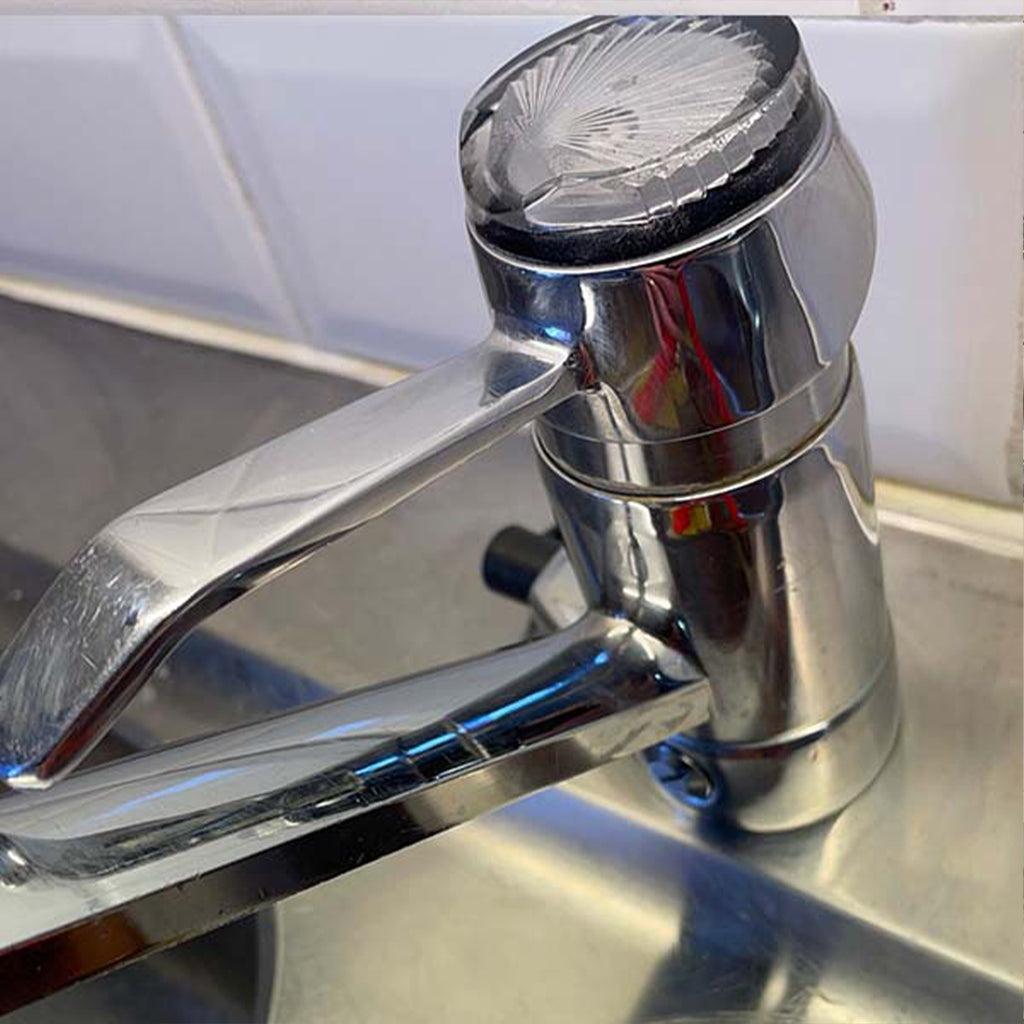
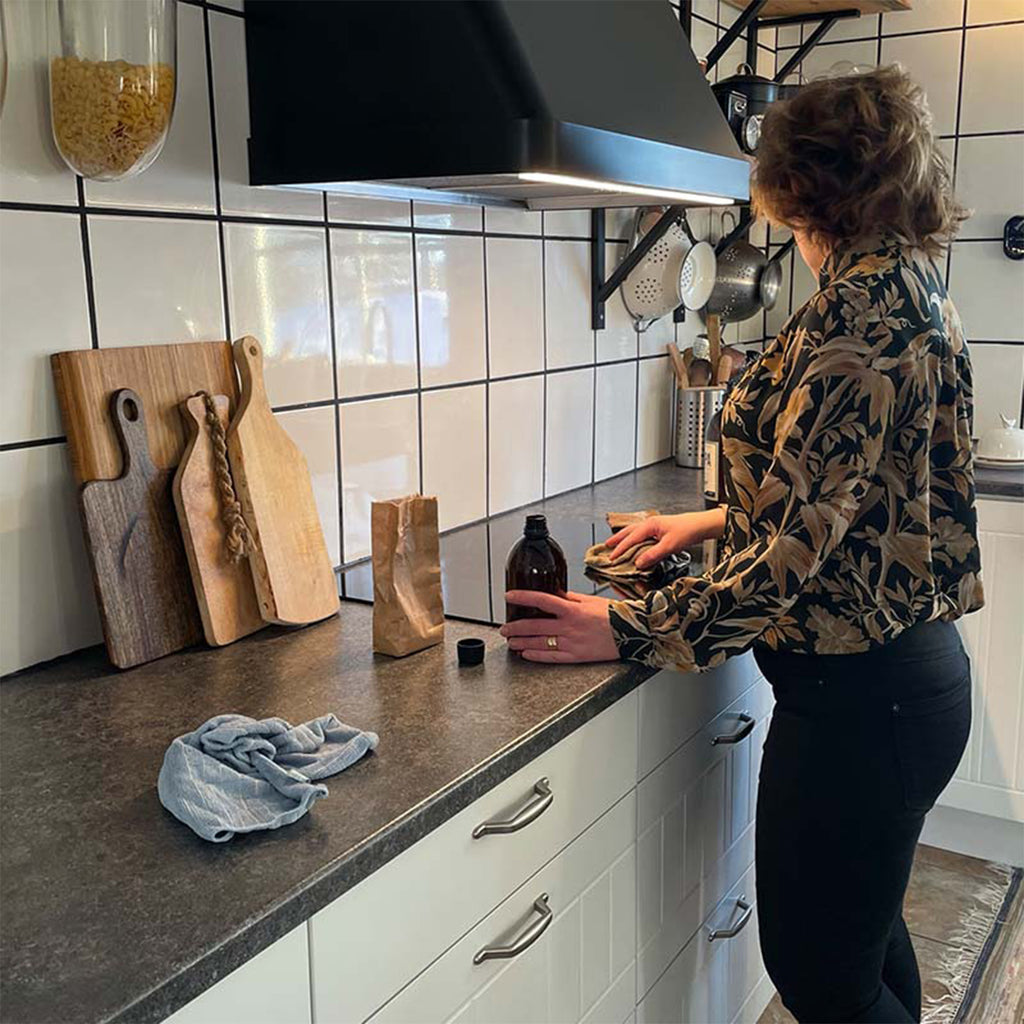
How to do it:
1. Soak paper towels in vinegar.2. Wrap the thoroughly soaked paper around the tap. It should cover the entire area of the tap where limescale is present.
3. Secure everything by pulling the stocking over it and tying it tightly.
4. Leave to work for 1–2 hours
5. Scrub the faucet with a brush and liquid soap – make sure to clean the joints thoroughly.
6. Rinse and wipe!
Just like that, your stubborn limescale stains are gone!
Watch the video below to see how it's done!
Products that may be useful when removing limescale
_______________________________________________________________________________
Questions and answers
- Why is vinegar effective for removing limescale deposits?
- Why are paper towels and nylon stockings used in the process?
- Why are a scrub brush and soap needed after the vinegar has worked?
- How long should you let the vinegar sit on the limescale deposits?
- Why is it important to rinse and wipe thoroughly after removing the limescale?